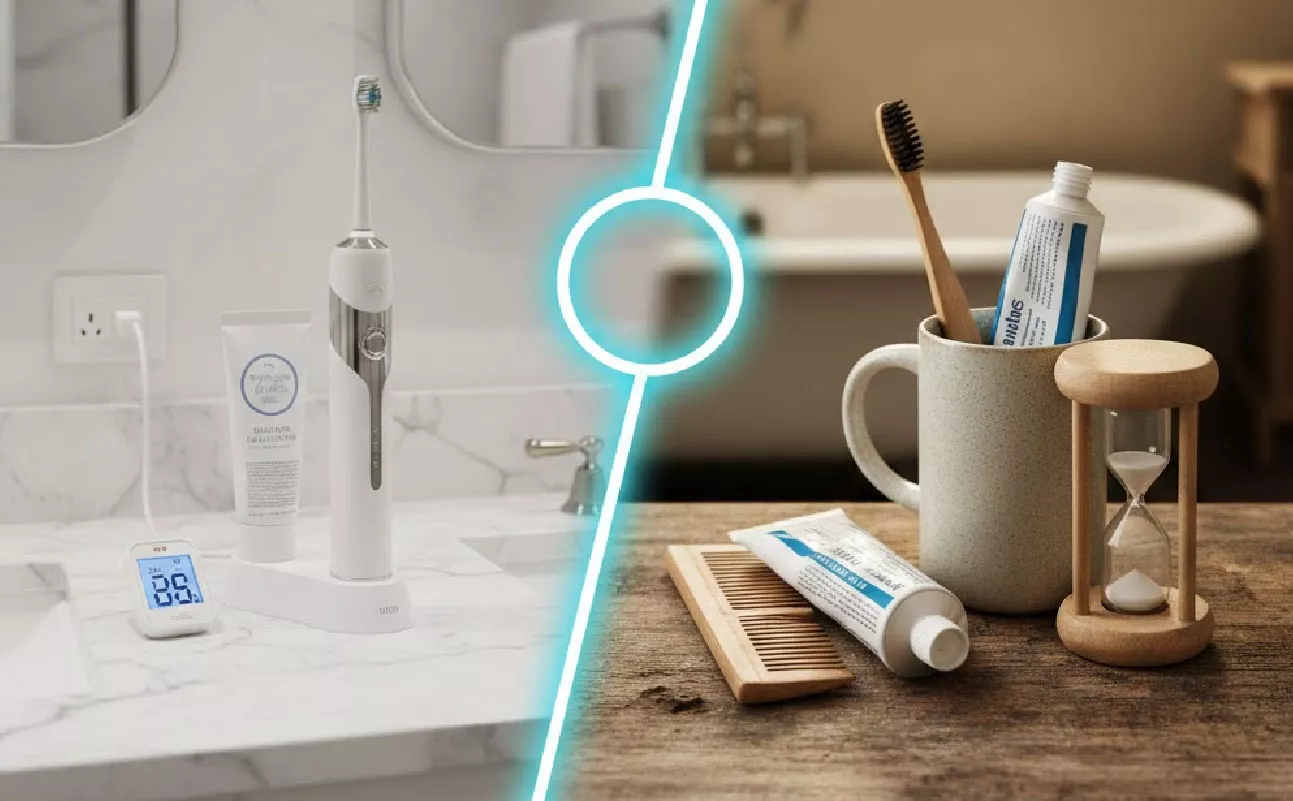
When it comes to brushing your teeth, one big question comes up again and again: electric vs manual toothbrush — which cleans better? With so many options on the shelves, it’s easy to feel unsure. The truth is, both can keep your teeth healthy — but one may work better for you depending on your habits, skill, and dental needs.
Let’s break it down in simple language so you can choose the best toothbrush for your smile.
Why the Type of Toothbrush Matters
Your toothbrush is your first line of defense against:
- Plaque and tartar buildup
- Gum disease
- Tooth decay
- Bad breath
- Stains
If brushing isn’t thorough — whether due to poor technique or the wrong tool — plaque remains and leads to inflamed gums and cavities. So choosing the right toothbrush truly matters.
Electric Toothbrush: How It Works and Who Benefits Most
An electric toothbrush uses powered vibrations or rotating-oscillating heads to move the bristles faster than you can manually.
Benefits of an Electric Toothbrush
- More plaque removal — Studies show electric toothbrushes remove more plaque than manual brushes, especially the oscillating-rotating type.
- Built-in timers — Helps you brush the dentist-recommended 2 minutes.
- Consistent brushing technique — The brush does most of the work.
- Great for gum health — Reduces inflammation when used correctly.
- Helpful for limited mobility — Ideal for arthritis, Parkinson’s, or dexterity challenges.
- Fun for kids — Encourages better brushing habits.
Possible Downsides
- Higher cost
- Requires charging or batteries
- Heads need regular replacing
- Can be too aggressive if you press too hard
Many electric models now include pressure sensors to protect your gums — a big plus.
Manual Toothbrush: Simple, Affordable, and Effective
The classic manual toothbrush has been around for decades — and when used correctly, it can clean extremely well.
Benefits of a Manual Toothbrush
- Affordable and widely available
- No charging or batteries
- Light, portable, and travel-friendly
- Comes in various shapes and styles
- Easy to replace
Possible Downsides
- Results depend heavily on your brushing technique
- No timers or built-in feedback
- People often brush too hard or too fast
- Missed areas are common — especially back molars
A manual toothbrush works best for people who already have excellent brushing habits.
Electric vs Manual Toothbrush: Which Cleans Better?
Here’s the honest answer:
👉 Electric toothbrushes generally clean better than manual brushes — especially for plaque removal and gum protection.
This is because:
✔ They create thousands of micro-movements per minute
✔ They reach along the gumline more efficiently
✔ They encourage longer brushing times
✔ They reduce user error
But — and this matters — a manual toothbrush can work just as well when used properly and consistently.
Technique Matters More Than You Think
No toothbrush can fix poor brushing habits. For the best clean:
Correct Brushing Tips
- Brush twice a day for 2 minutes
- Use gentle circular motions
- Hold the brush at 45° to your gumline
- Brush your tongue
- Replace your brush or head every 3 months
- Always use fluoride toothpaste
Avoid scrubbing hard. Gum damage happens more from pressure — not the type of brush.
Who Should Choose an Electric Toothbrush?
An electric toothbrush is especially helpful if you:
- Have gum disease or bleeding gums
- Have braces, bridges, crowns, or implants
- Struggle with dexterity or grip strength
- Tend to brush too quickly
- Want better plaque removal with less effort
- Have sensitive teeth (with soft-bristle settings)
- Want dentist-recommended consistency
Kids and teenagers also benefit because electric brushes turn brushing into a habit — not a chore.
Cost Comparison: Is an Electric Brush Worth It?
Manual Toothbrush
Low cost
Readily available
Needs strong brushing discipline
Electric Toothbrush
- Higher upfront price
- Ongoing cost for brush heads
- Long-term gum and plaque benefits
Think of an electric toothbrush as an investment in fewer dental problems later. But if cost is a concern, a high-quality manual brush still works — just focus on technique.
Gum Health: Which Protects Your Gums Better?
Electric toothbrushes often win for gum health because they:
- Apply even, gentle pressure
- Offer pressure sensors
- Reduce aggressive scrubbing
- Clean along the gumline more effectively
Manual brushes can also be gentle — but many people unintentionally brush too hard.
Sustainability Considerations
If eco-friendliness matters, consider:
- Bamboo manual toothbrushes
- Electric handles with recyclable heads
- Brands offering recycling programs
Every option has pros and cons — choose what aligns with your values.
What Do Dentists Recommend?
Most dentists agree:
👉 The best toothbrush is the one you will use properly — twice a day — with fluoride toothpaste.
However, many dental professionals recommend electric brushes because they reduce user error and improve long-term oral health outcomes.
FAQs
Is an electric toothbrush better for braces?
Yes — it cleans around brackets and wires more effectively.
Can a manual toothbrush still be effective?
Absolutely — if you brush thoroughly and consistently.
Should I use soft or medium bristles?
Always choose soft bristles to avoid gum recession.
Do electric toothbrushes whiten teeth?
They don’t bleach teeth, but they remove more surface stains.
Final Verdict: Electric vs Manual Toothbrush — Which Should You Choose?
If you want the easiest way to remove more plaque, protect your gums, and maintain excellent oral hygiene, an electric toothbrush usually cleans better.
But if you:
✔ brush properly
✔ use fluoride toothpaste
✔ clean for 2 minutes
✔ replace your brush regularly
A manual toothbrush can still keep your smile healthy.
The real goal is simple:
a toothbrush that fits your lifestyle — and keeps you brushing twice a day.